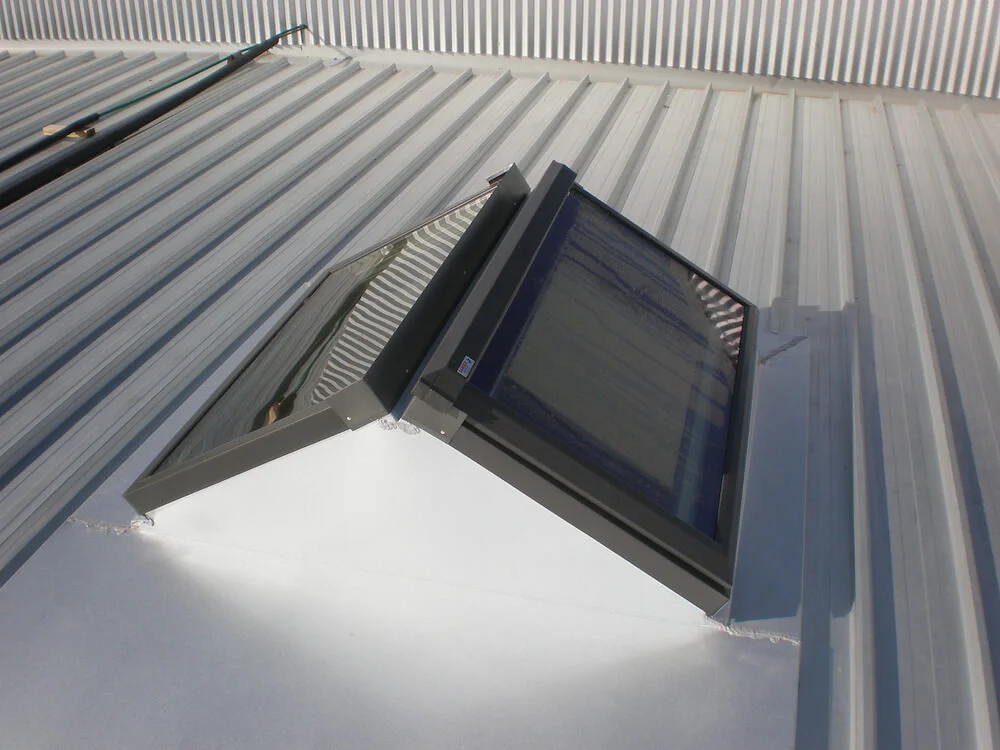
Finding water around a skylight can be concerning, particularly after heavy Melbourne rain. But a leak does not automatically mean the entire skylight needs replacing.
Water can enter around a skylight for several reasons. The problem may involve the skylight itself, the flashing around it, surrounding roofing materials or even condensation that appears to be a leak.
Before deciding what to do next, it is important to identify where the water is actually coming from. In some cases, a relatively localised issue may be addressed without replacing the skylight. In others, replacement can be the more practical long-term option.
First, Is the Skylight Actually Leaking?
Water appearing around a skylight does not always mean water is entering through the skylight.
Condensation can form on glazing when warm, moisture laden indoor air meets a colder surface. Bathrooms, kitchens and other areas with higher humidity can be particularly susceptible.
Water may also travel along roof timbers or other building materials before becoming visible near the skylight. This means the point where you notice staining or dripping is not necessarily the point where water is entering.
A proper inspection should therefore consider the skylight, flashing, roof covering and surrounding area rather than focusing only on the glass.
When Might a Skylight Be Repaired?
A repair may be appropriate when the skylight itself is still in good condition, and the problem is limited to a particular component or nearby area.
The exact repair will depend on the skylight design and cause of the problem. Loose components, damaged seals or deterioration around part of the installation may sometimes be able to be addressed without replacing the complete unit.
However, simply applying sealant around a leaking skylight is not necessarily a long-term solution. If the underlying cause has not been identified, water may continue finding its way into the roof.
This is why diagnosing the problem properly is more important than simply treating the visible symptom.
What Does Reflashing a Skylight Mean?
Flashing creates the weatherproof transition between the skylight and the surrounding roof.
Its job is to direct rainwater around the skylight and back onto the roof surface. Different roofing materials and skylight designs require different flashing arrangements.
Over time, flashing can become damaged, deteriorated or affected by changes to the surrounding roofing. Problems can also occur where an older skylight has been installed with flashing that is no longer performing as intended.
If the skylight remains sound but the flashing is responsible for the water entry, reflashing may be considered instead of replacing the entire skylight.
Modern VELUX skylights in Melbourne, for example, use flashing systems designed for particular roof applications, while some flat roof products and other installations require custom-made flashing. Belle also manufactures custom skylights, where the installation details can be designed around the particular roof and opening.
When Is Skylight Replacement Worth Considering?
There comes a point where continuing to repair an ageing skylight may no longer be the most practical option.
Replacement may be worth considering when the skylight itself has deteriorated, glazing is damaged, components are no longer performing properly, or repeated water problems have occurred.
Older skylights may also lack some of the glazing, weatherproofing and operating features available in current products.
For homeowners looking at replacement skylights in Melbourne, the existing opening may also create an opportunity to reconsider what the room needs. A fixed skylight could potentially be replaced with an opening model where ventilation would be useful, subject to the roof and installation requirements.
Similarly, an ageing dome or older skylight may be replaced with a more contemporary glazed product where suitable. Belle’s VELUX FCM flat roof skylight, for example, is designed for flat roof applications and can be used as a replacement option for certain older acrylic dome sizes.
Consider the Condition of the Surrounding Roof
The skylight should never be assessed in isolation.
Cracked roof tiles, damaged metal roofing, blocked drainage paths or deterioration around the opening may all contribute to water entry.
If the roof itself requires attention, replacing a skylight without addressing the surrounding issue may not solve the problem. Likewise, roof replacement or major renovation work can be a sensible time to review an older skylight while the surrounding roofing is already being worked on.
Repair, Reflash or Replace?
There is no single answer that applies to every leaking skylight.
A relatively new skylight with a localised flashing issue may require a very different solution to an older unit that has already experienced repeated problems.
The best approach is to determine:
- where the water is entering
- the condition and age of the skylight
- whether the flashing is still performing correctly
- the condition of the surrounding roof
- whether parts of the existing installation have deteriorated
- whether replacing the unit would provide a better long term outcome
Taking these factors into account helps avoid unnecessary work while also reducing the risk of repeatedly repairing a skylight that is nearing the end of its useful life.
Need to Replace an Existing Skylight?
If an inspection shows that replacement is the most suitable option, the new skylight should be selected for the roof, room and existing opening rather than simply replacing like for like without considering other possibilities.
Belle Skylights supplies a wide range of VELUX, Solatube and custom skylight solutions for Melbourne homes, with options for pitched and flat roofs as well as standard and custom applications.
If you are considering replacing an older or leaking skylight, contact Belle Skylights on 1300 168 374 to discuss the available options for your property.
